
'The day we start making rules purely along caste lines, we only divide society further. That's the conversation the government needs to have, and soon.'

'Instead of choosing dialogue, the government chose repression... Force ought to be the last resort, not the first.'

Ayush Shetty's coach, Sagar Chopda, believes that the Indian shuttler's challenging World Championships opener against world No. 1 Shi Yu Qi could work in his favour, citing Shi Yu Qi's recent form and the home crowd advantage.
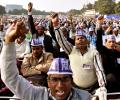
The Centre has informed the Supreme Court that the 'creamy layer' principle, which excludes affluent individuals from reservation benefits, does not apply to Scheduled Castes (SCs) and Scheduled Tribes (STs). This stance opposes Public Interest Litigations (PILs) seeking to implement such a principle for SC/ST reservations and to direct the government to formulate policies for more equitable distribution of reservation benefits.

'1991 was an exceptional period in Indian history.' 'A big 400-volt shock was administered to the system, which was required. Today, we are in a much, much better position.'

'For the rest of his tenure, people will start with the assumption that even Modi can be forced to bow down'

'The real shock is going to be from a deficient monsoon.'
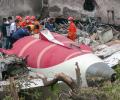
'...because that protects their aviation industry.' 'The Boeing 787 is one of the most widely-flown wide-body aircraft in the world, and Airbus is running neck-and-neck with Boeing.' 'Airbus is not going to let an opportunity like this pass.' 'If a software problem with the 787 is confirmed, they will use it to increase their own orders.'

'A lot of people feel there is pressure on the AAIB not to go against Boeing or GE -- both enormous American companies.' 'If the AAIB implicates Boeing or GE, it will impact their sales.' 'If their sales are impacted, jobs are lost in the United States. No government would willingly do that.'

The amazing story of how a little known cheese from Ladakh stunned the world!

A leader can spend authority on themselves -- on appearing decisive, on appearing in control, on appearing irreplaceable. Or they can spend it on the people around them -- on giving them the ball back, on creating conditions in which other people's confidence and capability can grow. Over a long enough horizon, the second compounds in a way the first never does. And that's exactly what Microsoft Chairman and CEO Satya Nadella has done.
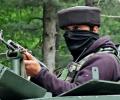
The firing exchanges are taking places in five districts out of seven border districts of Jammu and Kashmir. So far, there has been no firing reports along International Border in Samba and Kathua districts.

...is a way out, notes Prem Panicker in his must read blog on the Iran War. What the indefinite extension produces is a prolonged condition of not-war-not-peace, in which oil markets cannot stabilise, Asian refineries cannot plan, European governments cannot stop subsidising consumption they cannot afford, and the next flashpoint -- a seized tanker, a miscalculated drone strike, a Truth Social post that claims too much -- is one news cycle away.

'At the first sign of real trouble, that money will move. There will be a run.'
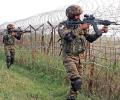
This marked the sixth consecutive night of ceasefire violations by Pakistan along the LoC, amidst heightened tensions between New Delhi and Islamabad following a recent terror attack in Pahalgam on April 22.

Trump has made it clear: the US will not lift its blockade of Iranian ports until a deal is signed.

This weekend, Donald Trump has begun to say the quiet part out loud -- that he wants to take control of Iran's oil, a formulation more in line with his robber-baron style of international relations.

Taking Kharg would give the US control over virtually all of Iran's oil exports and thus provide significant leverage, notes Prem Panicker in his must read daily blog on the Gulf War. It would also put American troops within range of Iran's remaining missiles, drones, and artillery on a piece of real estate that is just eight square miles in size, and just 15 miles from the Iranian mainland.
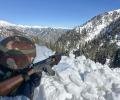
The exchange of fire occurred even though the directors general of military operations of India and Pakistan spoke over the hotline on Tuesday amid rising tensions between the two countries over the Pahalgam terror attack on April 22.

By all available indications, the White House drafted a face-saving note and handed it, ready-made, to Islamabad. Pakistani Prime Minister Shehbaz Sharif was supposed to then post it in the guise of a plea urging Trump to extend the deadline by two weeks 'to allow diplomacy to run its course'. Trump would then graciously accept Pakistan's 'request' and declare a ceasefire. Sharif dutifully posted the message on X. Except that he, or whoever was handling the account, forgot to delete the tell-tale first line visible in the edit history: 'Draft - Pakistan's PM Message on X'. Prem Panicker's must read blog on the Iran War.

The pause gives the US time to breathe, to regroup, to move its expeditionary force into position without risk of interception along the way. It gives Iran nothing -- on the ground, attacks against its infrastructure continue apace. Prem Panicker in his must read daily blog on the Gulf War.
For the ninth consecutive night, Indian and Pakistani troops engaged in small arms fire along the Line of Control (LoC) in Jammu and Kashmir, continuing a pattern of heightened border tensions. The skirmishes, initiated by Pakistani troops in violation of the ceasefire agreement, have led to a tense situation along the LoC and International Border (IB). The incidents come in the wake of the April 22 terror attack in Pahalgam, which claimed the lives of 26 people, mostly tourists. Civilians residing near the border have begun preparing their bunkers, anticipating potential escalation. Despite a recent hotline conversation between the Directors General of Military Operations (DGMOs) of India and Pakistan, where India cautioned Pakistan, the ceasefire violations persist.

Pakistan's reluctance to authenticate has prevented any move in talks over the issue.

Egypt, Pakistan, Saudi Arabia and Turkey met in Islamabad in what analysts say is the formal opening of a new diplomatic formation that could reshape the post-war regional order. Their immediate goal is a ceasefire; their larger ambition is to ensure that neither Iran nor Israel emerges from this war in a dominant position. Pakistan's foreign minister then flew directly to Beijing and mooted a Chinese role as guarantor of any eventual agreement. Prem Panicker continues his must read daily blog on the Gulf War.

The United States, which entered this war in expectation of a short, sharp win along the Venezuela model, is now preparing for deeper involvement in a conflict it does not fully control, without the allies it typically relies on, against an adversary that is not behaving as expected, in a global environment that is already absorbing economic shock. Prem Panicker continues his must read daily blog on the Gulf War.

Fight on toward goals that keep receding, or exit with most objectives unmet. Trump is agitated, his poll numbers falling below the Plimsoll line, his base fractured between those who back the war and those who remember that he campaigned on ending them.

'Was the five-day pause ever meant to hold, or was it simply another instrument of signaling, of positioning, of buying time in a war where even the pauses are tactical?' asks Prem Panicker in his must read daily blog on the Gulf War.
Pakistan troops have violated the ceasefire agreement for the 11th consecutive night, firing on Indian posts along the Line of Control (LoC) in Jammu and Kashmir. The firing began in Kupwara and Baramulla districts and spread to other sectors, including Poonch, Rajouri, Mendhar, Naushera, Sunderbani, and Akhnoor. The Indian Army responded promptly and proportionately. The ceasefire violation comes despite a recent phone call between the Directors General of Military Operations (DGMOs) of India and Pakistan on April 29. This marks the latest escalation of tensions between the two countries, following a terror attack in Pahalgam in April.

The purge in Washington does not pause the war. Strikes continue, Hormuz remains closed, and Brent crude is still dancing around $109 a barrel. For India, the command chaos in the Pentagon is another layer of uncertainty piled on five weeks of conflict that was already straining every buffer Delhi has.

'Even if it is defeated and the Speaker remains, the Opposition parties that have lost faith in his impartiality will continue to have that feeling.' 'If the Speaker reflects on this and tries to be more neutral, more impartial, more objective in his conduct -- then one can say the resolution had a salutary effect. That would be the best outcome.'

General Manoj Mukund Naravane's memoir has triggered a controversy by revealing behind-the-scenes decision-making during the 2020 India-China standoff in Ladakh. Its candid account of military and political responses at a critical moment has reignited debate over civil-military relations, accountability, and the limits of disclosure in matters of national security.

The question is no longer whether the war will expand. It has. The next few days will tell us whether the war stabilises around Hormuz or whether the Strait itself becomes the trigger for a far larger rupture. What to watch for over the next 48 hours is simple: Any move by the US toward direct naval control of the Strait; any credible Iranian attempt to disrupt or mine shipping lanes and, critically, whether energy infrastructure in the Gulf continues to be targeted.If those lines are crossed in tandem, the war will no longer be containable within the region.

'The next two to three weeks will not be decided in Washington.' 'They will be decided in Tehran, in whatever calculation Iran makes about the costs of continued resistance against the costs of appearing to have yielded.'
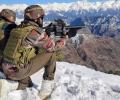
Pakistan's troops have engaged in unprovoked firing along the Line of Control (LoC) and International Border (IB) in five districts of Jammu and Kashmir, prompting retaliation from the Indian Army. This marks the eighth consecutive night of such incidents, following heightened tensions stemming from a recent terror attack in Pahalgam. Civilians residing along the LoC and IB are preparing their bunkers in anticipation of potential escalation.

'There is no shortage of fuel whatsoever.' 'India is stock surplus as far as petrol and diesel are concerned.'

The deployment of the army in all sectors along the Line of Actual Control, the de facto border between India and China, is 'robust, well poised and prepared to deal with any emerging contingency'.

An article about Sanju Samson's journey to success in the T20 World Cup, highlighting the influence of his father's advice and his commitment to his roots.

Trump may strike. He may announce productive talks and extend again. He may do both at the same time. Iran will not open the Strait on someone else's terms, so no matter what happens, that problem will remain unsolved. And the IRGC will still be collecting its $2 million toll from every ship bold enough to ask permission to pass.

'The atmosphere he has created in the team -- he has tried to infuse a culture of playing for the team and not focusing on personal milestones.'

When everyone has footage and no one can verify it, the loudest voice wins, notes Prem Panicker who begins a daily blog on the War in the Middle East.
